
In the thrill of the swarm
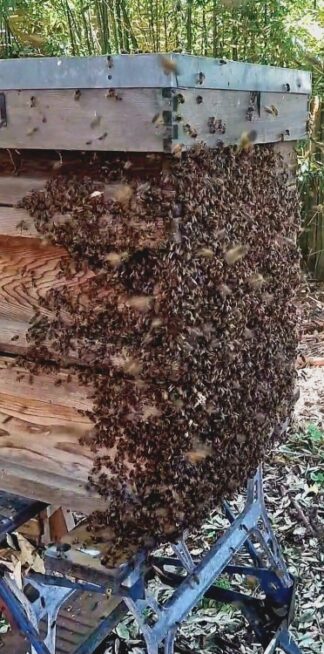


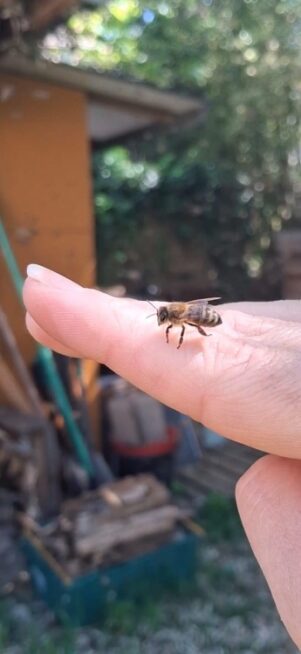
I saw such a spectacle this week. 10,000 to 20,000 bees, all moving house at once, writes Kairos beekeeper Grace Madden.
One part of my job as a beekeeper is to prevent this from happening. I was literally seconds too late… this time. I’m not sorry, though. To see this kind of pure force of nature at work, to be stood right in the middle of 20,000 bees is a thrill not many get to experience.
This is the time of year when bees’ instinct to swarm kicks in.
Swarming is natural. It’s when the colony decides it is getting big enough and that they’ll soon run out of room for new eggs. So, they decide to make a new Queen, take half the colony off and find a new home. It’s an incredible sight to behold.
Had I started the inspection instead of popping indoors to have a glass of juice before I got stuck in, I might well have been able to split them in a controlled manner myself.
We call this an ‘artificial swarm’. When doing an inspection we can see they’ve made a new Queen, so they are getting ready to go. At this point, I can get a new box and take the old Queen, along with a few frames of food, brood and nurse bees, to set up this new colony. This leaves the new Queen with lots of room to lay eggs. They lose the urge to swarm.
As beekeepers, we must always have a close eye on the weather, especially from late winter to early spring. Part of the job is to watch and to try to interpret their actions. Are they thinking of swarming? Are they being robbed? Are they sick or worse? These are all difficult things to decipher when you can’t actually open the hive to look inside. It’s a tricky time for us beekeepers.
You see, it needs to be consistently 12° and over before you should attempt to do the first spring inspections. You otherwise run a serious risk of the colony absconding. Basically, they get annoyed you’ve let the heat out!
Going into winter, bees ‘glue’ the hive shut with bee glue, or propolis, filling in any holes that let in light or a draught. This keeps the colony sufficiently warm to see out the cold weather. If we unstick this glue too early, the colony is not yet strong enough to re-stick it or reheat the hive. If the temperature drops below 12°, they can quite easily perish, so they often leave en masse in search of somewhere sheltered and dark to keep warm.
By this time of year, the winter bees will have mostly died off, having spent five or six months keeping the Queen warm and fed. The new bees have used up the last of the winter stores feeding the hundreds of growing workers, now being assigned their various tasks.
As the weather warms up, these rapidly expanding new generations of honeybees start to fly to orientate themselves to their new surroundings. If you watch for a while, you can see the flying bees venture out, coiling back and forth up into the air as they take in everything they see. They store these as landmarks so they’ll find their way home after a day collecting nectar, pollen, water or tree resin.
Luckily for me, in this particular instance they didn’t stray far in the garden, affording me the opportunity to catch them, rehouse them, then ship them off to another apiary, where they are now thriving. This is just the beginning of what I’m hoping will be a super busy spring, leading to a super productive summer!
 For a glimpse into the middle of the swarm, take a look at Grace’s latest Instagram video: @kairos_bees