
A priceless honey harvest
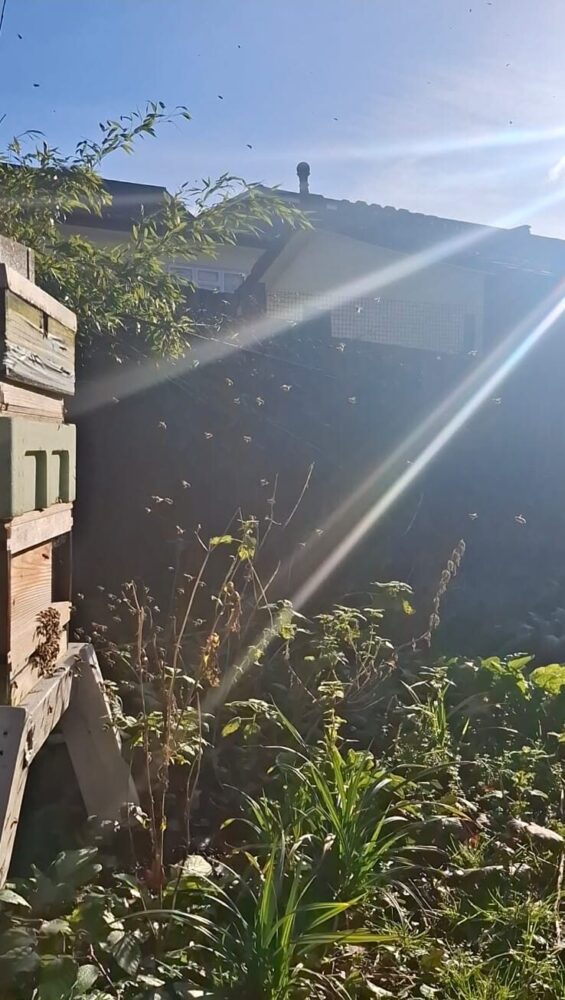
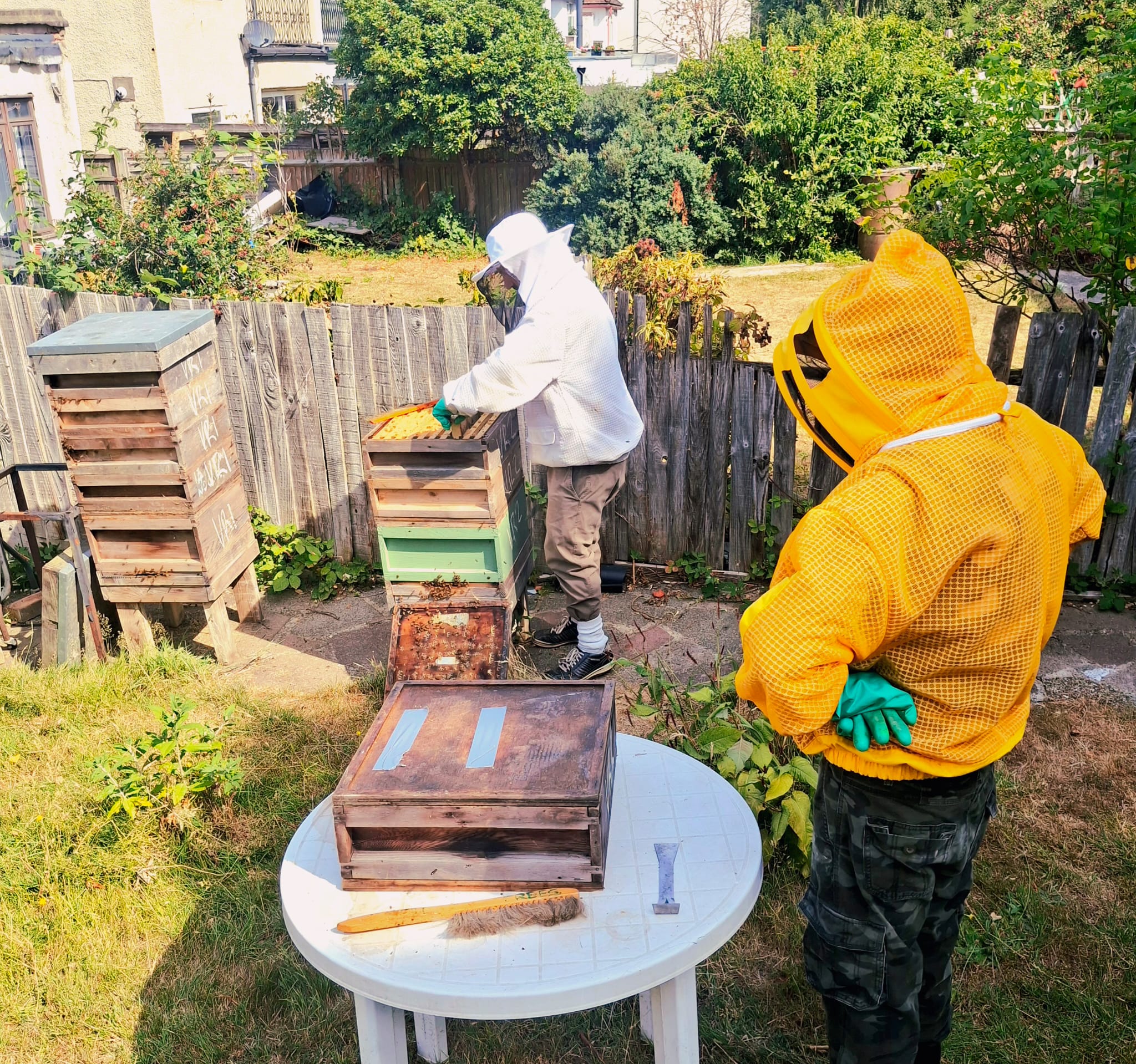
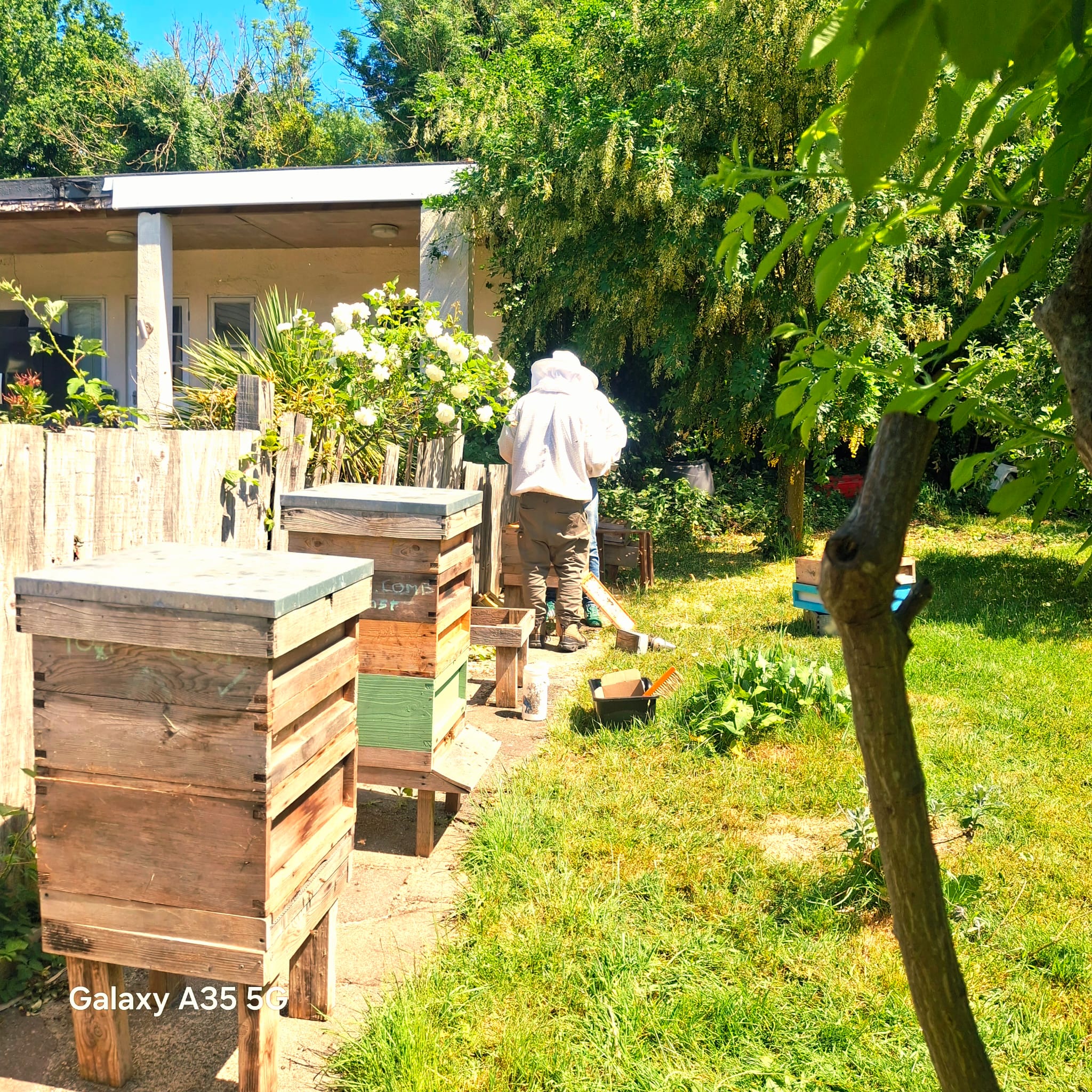
Why is our honey so special? It’s priceless, if you ask me, writes Kairos beekeeper Grace Madden.
I’ve seen first-hand the physical healing power of our honey on cuts, scrapes and burns, but its healing power on the soul is a much more profound experience.
Urban wildflowers and bee enzymes give our honey its physical goodness, but working alongside the bees has a truly deeper effect. I’ve had first-hand experience of both.
This year, we were gifted approximately 360 lb of honey from our bees. They have plenty of time to replenish their own winter stores over the coming months.
This season, they hit the air flying, so to speak. By the end of April, they had already produced the equivalent of last year’s entire yield, so the only way from then was up, with the boxes piling high.
It has been said that, spiritually, bees live on the non-physical plane. Work alongside them for long enough and you may begin to understand why.
The bees bring the most unlikely people together. They help forge new friendships and build confidence in new or renewed abilities.
There is so much work that goes into harvesting and making the honey, by one and all, from nectar to jarring. For us, at least, it is a labour of love and everyone has a part to play. It is a community effort, just like the hive: hard work, community and everyone playing their part.
The fruits of that work have already travelled far beyond the apiary.
One jar of Kairos honey now sits proudly in a temple on the shores of the Holy Saraswati River in India, given in thanks for the monsoon rains helping local farmers.
Meanwhile, on the south coast of England, our beeswax has been used to restore a piece of much-loved furniture. The verdict on the finished Kairos beeswax polish? “It’s a jar of magic.”
A huge thank you to our volunteers and, of course, to Mick for their tireless efforts.
A plea for our pollinators
We have had a fantastic harvest this year. We did, however, suffer a couple of huge losses in early spring. Having inspected the dead bees, we suspect that poisoning may have played a part.
Sadly, and to my constant dismay, it is common to see people mowing or strimming lawns and spraying weedkiller and pesticides as soon as there is a blue sky and a bit of warmth in the air.
This has a detrimental effect on our pollinators. Not only can the poisons wipe out a thriving colony overnight, the loss of early spring flowers has such a knock-on effect that we may have to feed the bees artificially, affecting the natural character of the honey they produce.
Please consider leaving some early flowers for the bees, mowing less frequently and avoiding weedkillers and pesticides wherever possible.
And, in a world where there are growing concerns about adulterated honey and the addition of sugar syrups within commercial supply chains, it is also more important than ever to support local apiaries in the fight against the sterilisation of our environment and the decline of our pollinators.
- If you would like some of this year’s Kairos honey, please contact Grace: bees@kairoscommunity.org.uk